The Spanish school system has been a very strange and new experience. We go to classes, don't do any sort of homework or have real assignments on a regular basis. The only grades that go in the book are 2 enormous exams, a midterm and a final, and possibly an end-of-term paper. This past week was midterm week, which was kind of shocking because it means that I am over halfway through my semester! I'm not quite sure how that happened. Either way, the past few weeks have been filled with hours of studying and test taking, but thankfully they are all over and I don't think I failed anything. I did, however, manage to find some time to have some fun in between studying and took a day trip to Cádiz with my program on Sunday.
Cádiz is an extremely old city full of history (for example, it was the birthplace of the 1st liberal constitution of Spain in 1812. Thanks history class) on the Atlantic Ocean. When we got there in morning it was a little cold and a lot cloudy. We took a walking tour of the city, climbed the tower of the cathedral and stopped for fresh bread and pastries at a fantastic little bakery. By the time the tour ended we were at the ocean and the sun had come out. It was gorgeous, and the smell of salt on the air was wonderful. We walked around to find some lunch and ended up at a tiny takeout place that serves fried seafood. I have eaten more fried food in Spain than during the first 20 years of my life combined. The other night my host mom deep-fried my burrito for dinner. I just might have a heart attack before I come home, but everything tastes so good! Anyway, we ordered fried choco and french fries. Choco is fried cuttlefish, which we didn't know until after we had eaten it at restaurants a few times. It's very similar to calamari and is pretty good if you can get past the cartilage-like texture. After lunch we went to the beach, walked in the sand, dipped our feet in the (cold) ocean and soaked up as much sun as we could.
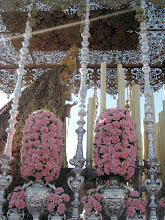
Sevilla is gearing up for Semana Santa which starts on Sunday, el Domingo de Ramos. The city is going to be totally packed with people gathering in the streets to watch the church processions, called pasos. I'll write more about it next week, but it's a huge deal in Sevilla. All classes are canceled next week so that everyone can enjoy the celebration. Even my professors are ready for a break. Today my history professor spent most of class letting us ask him questions about anything and everything - Spain, traveling, food, gardening, etc. It was greatly appreciated by all of his students who didn't want to be awake and in class at 9am.
My friend Lori and I are taking advantage of the first part of this break and taking a trip to Dublin, Ireland. We leave Friday morning and will be back in Sevilla on Tuesday to see the rest of Semana Santa. I've never been to Ireland and didn't think that I would get there this semester so I'm really excited to go!! I'll let you all know how it goes.
Besitos,
Hannah
Wednesday, March 24, 2010

Sunday, March 14, 2010
Days Without Rain!
Spring in Sevilla has been unusually cold and wet. In the past month that I have been here it has rained almost every day. Sevillanos aren't used to not seeing the sun, and they were going as crazy as I was. Wet shoes, squishy socks, and cold walks to school aren't very fun day after day. However, things appear to be turning around and for this past week the weather has been wonderful.
This weekend was absolutely perfect, and the Spaniards were out in full force. When the sun is shining and the weather is warm Sevilla is a whole different city. People flood the streets, sidewalk cafes, parks and plazas. Everywhere you walk you can hear live music being played on street corners and in plazas, by people who are trying to make a living and by people who just love to play. Crowds of people laugh, sing, yell, shout across to friends and neighbors, always talking with their hands with broad, sweeping gestures.
Little kids are so excited to be outside after a month of rain. Few things can make a person happier than watching happy kids play. In the parks they find their way straight to the places they can make the biggest mess of themselves. While I was sitting in Parque María Luisa I watched kid after kid run to the fountain/pond and the surrounding puddles of mud. Some made the jump in before their parents could catch up, sadly others did not.
Days liek these really show me just how laid back the Spanish culture is. People here don't walk, they stroll. Even people who are in a hurry seem to walk slowly to me. The sidewalk cafes are filled with couples, friends, adn families leisurely enjoying a coffee, a bottle of wine with olives, bread and a dessert or two. Parents are very relaxed and patient with their children, and it's a beautiful thing to see. After class one day I sat on a bench overlooking the river listening to music and writing for an hour, just to enjoy the weather and the day. While I was there I saw a dad and his 2 or 3 year old daughter walking along the boardwalk near me. She was curious about everything she saw, playing with/chasing the pidgeons, kneeling down to look at every rock she passed, climbing benches, climbing stairs, sitting down, standing up, jumping. Her dad just watched her, talked to her, let her move at her own pace and do what she wanted to do. It took them over an hour to walk 100 yards but he never put her in the stroller or made her move on. Families here are so loving and affectionate. Family is the center of the Sevillan world, and that includes aunts, uncles, cousins, grandparents, best friends, god parents, etc.
I have midterms next week, so this weekend has been full of "studying." In all seriousness, I have studied quite a bit but the weather has made it hard to stay inside. On Saturday a few friends and I met at the Plaza de España (an enormous, tiled Plaza built for the 1929 Iberian Exhibition) and walked into the surrounding Parque María Luisa to read and study. When the sun went down we grabbed a cup of coffee and headed home for dinner. At 11 we met at Elley's apartment in the neighborhood Los Remedios for a USA style girls night in. Here people typically don't visit each others' houses because most families live in small apartments but Elley's señora was gone for the weekend and was nice enough to let her have friends over. We hung out and watched The Hangover (hilarious) over bread, a platter of fantastic cheese, wine, and chocolate. It was surprisingly comforting to have a familiar night in with friends.
Today (Sunday) I have spent all day studying down by the Guadalquivir River. There isn't a whole lot of grass, but people are literally lining the banks, sitting on stone walls, bringing out blankets and towels to sit/sleep on. It reminds me of 4th of July in Detroit Lakes, waiting for the fireworks to start. It's that packed. I took a lovely nap in the sun, spent some quality time people watching, listening to the guitar music coming from somewhere up the river. Dare I say it? Spring has officially arrived.
This weekend was absolutely perfect, and the Spaniards were out in full force. When the sun is shining and the weather is warm Sevilla is a whole different city. People flood the streets, sidewalk cafes, parks and plazas. Everywhere you walk you can hear live music being played on street corners and in plazas, by people who are trying to make a living and by people who just love to play. Crowds of people laugh, sing, yell, shout across to friends and neighbors, always talking with their hands with broad, sweeping gestures.
Little kids are so excited to be outside after a month of rain. Few things can make a person happier than watching happy kids play. In the parks they find their way straight to the places they can make the biggest mess of themselves. While I was sitting in Parque María Luisa I watched kid after kid run to the fountain/pond and the surrounding puddles of mud. Some made the jump in before their parents could catch up, sadly others did not.
Days liek these really show me just how laid back the Spanish culture is. People here don't walk, they stroll. Even people who are in a hurry seem to walk slowly to me. The sidewalk cafes are filled with couples, friends, adn families leisurely enjoying a coffee, a bottle of wine with olives, bread and a dessert or two. Parents are very relaxed and patient with their children, and it's a beautiful thing to see. After class one day I sat on a bench overlooking the river listening to music and writing for an hour, just to enjoy the weather and the day. While I was there I saw a dad and his 2 or 3 year old daughter walking along the boardwalk near me. She was curious about everything she saw, playing with/chasing the pidgeons, kneeling down to look at every rock she passed, climbing benches, climbing stairs, sitting down, standing up, jumping. Her dad just watched her, talked to her, let her move at her own pace and do what she wanted to do. It took them over an hour to walk 100 yards but he never put her in the stroller or made her move on. Families here are so loving and affectionate. Family is the center of the Sevillan world, and that includes aunts, uncles, cousins, grandparents, best friends, god parents, etc.
I have midterms next week, so this weekend has been full of "studying." In all seriousness, I have studied quite a bit but the weather has made it hard to stay inside. On Saturday a few friends and I met at the Plaza de España (an enormous, tiled Plaza built for the 1929 Iberian Exhibition) and walked into the surrounding Parque María Luisa to read and study. When the sun went down we grabbed a cup of coffee and headed home for dinner. At 11 we met at Elley's apartment in the neighborhood Los Remedios for a USA style girls night in. Here people typically don't visit each others' houses because most families live in small apartments but Elley's señora was gone for the weekend and was nice enough to let her have friends over. We hung out and watched The Hangover (hilarious) over bread, a platter of fantastic cheese, wine, and chocolate. It was surprisingly comforting to have a familiar night in with friends.
Today (Sunday) I have spent all day studying down by the Guadalquivir River. There isn't a whole lot of grass, but people are literally lining the banks, sitting on stone walls, bringing out blankets and towels to sit/sleep on. It reminds me of 4th of July in Detroit Lakes, waiting for the fireworks to start. It's that packed. I took a lovely nap in the sun, spent some quality time people watching, listening to the guitar music coming from somewhere up the river. Dare I say it? Spring has officially arrived.
Lisbon Lovin'
February 25th-March 1st I traveled with some friends to Portugal. A very belated post about everything Lisbon...
February 28th was Día de Andalucía here in España, and school was canceled to celebrate. Most of the kids took advantage of this 4-day weekend to travel. I planned a trip to Lisbon, Portugal with three girls from Tufts University that I met on my program - Elley, Erica and Susan. When I made my list of places to travel while in Spain, Portugal was at the top so I was super excited to go. We arrived in Lisbon early Friday morning and left late Sunday night so we had three whole days to explore the city. In those three days I fell in love, and I fell hard. Lisbon is one of the most beautiful, interesting places that I have ever been. It is a big city, but very compact which makes getting around easy on foot, or by bus/metro.
Lisbon and San Francisco are often referred to as sister cities because they look so much alike. Both are extremely hilly, have quaint trolley systems, and the Golden Gate Bridge. Okay, so maybe it's not the same bridge but the '25th of April' bridge in Lisbon was built by the same group of people that built the Golden Gate bridge in San Fran and they are strikingly similar (http://www.mpifr-bonn.mpg.de/staff/pfreire/paulo/Lisboa_ponte25deabril.jpg). The weather was terrible while we were there, clouds, rain, and ridiculously strong winds but we had a great time anyway, and the weather just made the trip a little more interesting. I didn't really know what to expect from Portuguese food before we left but I was very pleasantly surprised. The food was honestly one of my favorite parts of the trip (as you'll be able to tell from the rest of this post), I LOVED almost everything that we ate, and it was all really affordable.
We began our journey at 11pm on Thursday night, catching an overnight bus from Sevilla to Lisbon. The bus was really nice, they played a movie for the first couple of hours and the seats could lay back but despite that it was a long, mostly sleepless 7-hour ride. We arrived in Lisbon at 6am (they are 1 hour behind Sevilla), deciphered enough Portuguese to purchase our metro passes and groggily found our way through the dark, winding streets to our hostel. For the record, Portuguese and Spanish are NOT similar languages. We could translate a few words here and there but most of the time I had no idea what was being said or written. An interesting fact for you all, (according to my tour guide) many Japanese words and Portuguese words are very similar because Portugal was the first Western country to establish a trade route with Japan and the two cultures have had a long period of contact.
We stayed at the Oasis Backpacker's Hostel and it was really incredible. First of all, it was inexpensive which is always a plus, but the rooms were super clean, the beds were comfortable, and the shower was amazing. We stayed in a 6-person room with 3 sets of bunk beds and a private bathroom. However, when we got to the hostel at 7am we couldn't check in yet but the guy behind the front desk let us drop our bags off in the laundry room. We ate breakfast at a little café we had passed on our way down the hill, and planned out our day. We went back to the hostel, took turns cleaning up in the downstairs bathroom and headed out to hit up all of the tourist sights in downtown.
We toured the Cathedral and some smaller churches that we passed, and hiked around the Castle of Saint George, which offered gorgeous views of the whole city and the coast. We had a list of recommended restaurants, so for lunch we decided to try one out. Walking through the city trying to find the restaurant we got caught in a massive downpour. Even with an umbrella, we were all soaked in a matter of minutes and the streets were like rivers with so much water running down the hills. So instead of continuing on to the restaurant we ducked into the next place we came across. It happened to be a kebab restaurant, and we all ordered kebab sandwiches because it was one of the only things on the menu that we could understand and we wanted food quickly. Oh my goodness, it was one of the greatest things I have ever eaten. Some sort of shredded meat, a garlicky white sauce, lettuce, tomato on a toasted bun. It was HUGE and came in a little wrapper/envelope so that it didn't fall apart while I was eating it. I made a huge mess of myself but it was well worth it.
When we got to the hostel we checked in officially, made it to our room and crashed for 3-hour naps. We woke up, showered and got ready to go out for dinner. We made it to the restaurant we were looking for during lunch that serves traditional Portuguese food. We ordered different dishes and shared, trying roasted chicken, cod (what Portugal is known for. I'm not a big fish person but I really liked this one), a seafood curry, and roasted pork. With a bottle of red wine, a bottle of white wine and 2 ice cream-esque desserts it was a perfect meal.
After dinner we went back to the hostel and mingled with the rest of the guests in the super nice kitchen/dining room/living room. We met some girls from California who are also studying in Spain, a guy who is actually studying in Sevilla this semester (who we ran into randomly last weekend in a bar in Sevilla, pretty crazy), and a girl from Argentina named Sol. We all decided to go out and try to find a place to listen to Fado music. We found a club that had a show starting in 5 minutes, and as long as we each drank 5 euros worth of drinks entrance was free. We ordered pitchers of sangria and enjoyed the show. Fado is a traditional Portuguese music style (similar to Flamenco in Spain). Typically there is a singer accompanied by guitar/mandolin type music. I wish that I could explain the vocal sounds of Fado music, they are strong, sad, and dramatic, but it's really something you need to experience. The show was pretty incredible, and Sol speaks Portuguese (as well as Argentinean Spanish, Catalan, and a little French) so she could translate what was happening in the song. All of the songs were really sad, but beautiful.
The next day we had signed up for something called the We Hate Tourism Tours van tour offered through our hostel. Little did we know but this was going to make our trip. There's a guy who works at the hostel named Bruno. He was born and raised in Lisbon, is absolutely in love with the city and surfing. Working at the hostel he realized that lots of people were leaving Lisbon without seeing all of the 'important' parts or having truly authentic Lisbon experiences. To fix this he started offering tours himself, in his huge, red 9-person van. Elley, Erica, Susan and I joined 4 other girls who are studying in Madrid on this all-day tour. Bruno took us to all of the hot spots in Lisbon and the surrounding cities: Sintra, Belem, and Cascais. Along the way we stopped at many small bakeries to sample the very best pastries that Portugal has to offer. As Bruno explained, the Portuguese love sugar more than anything, and one has never truly experienced Portugal if they have not tasted the sweets. Bruno was full of life advice and just listening to him would have made the tour worthwhile. In addition to the incredible desserts, we ate a chorizo (Iberian sausage) fresh bread calzone creation at a cute little roadside stand/trailer. Bruno has the owner's phone number so he calls her to let her know he will be stopping by with a tour. When we got there she was just pulling 9 of these amazing things out of the oven so they were fresh. Heavenly.
During the course of the day we visited and hiked the grounds of the Palacio de Pena in Sintra, which was built high on a hill by a king for his queen to express his love for her. It was beautiful, and the grounds legit reminded me of a scene from Fellowship of the Ring. We stopped at the western-most point of continental Europe and nearly got blown into the ocean by the wind. I'm not exaggerating, I've never been in wind like that, you could lean back and it would hold you up. We saw the Tower of Belem, which was built to welcome ships returning from the New World to Portugal, a huge monument built for all of the great Portuguese explorers, shipmen and mapmakers, and the Jeronimos Monastery. We also made a short stop at beach in between Cascais and Belem. It was so great to take my shoes off and walk through the sand! The beach has a steep sand ledge that drops off into the ocean, and the beach is eroding more and more every day. While we were there, huge chunks of sand would suddenly drop off into the water, making the beach a few feet shorter. It was crazy to watch. We were going to drive along the ocean into Belem but the police had closed down the highways because the waves were too high and were coming up over the road. We parked the car as close as we could and watched these unbelievable waves; I've never seen anything like it.
After our awesome van tour we walked over to a local fruit stand that was up the hill from the hostel and bought some fresh fruit and a cheesy bread thing called pao de queijo and had a picnic on our room floor. After some more epic naps we got dressed up, went out for dinner (once again, fantastic food and wine), and tried to find a place to go dancing. We found a few clubs but we were about 30 years too young. I've never seen so many 'older' people having such a great time. At 3 in the morning the club was packed with people who were old enough to be my parents rocking out to '70s and '80s music. We decided to leave the partying to them and headed to bed.
The next day we checked out, but once again left our bags in the laundry room so we could explore the city without them. We hopped on a tram to see where it would take us. We ended up having a super interesting conversation with the tram driver about everything from international politics to our shared love of pancakes and maple syrup. We rode the tram for over an hour just so we could keep talking to her. After that we took the metro to a different 'zone' of Lisbon to visit the Gulbenkian Museum, then grabbed our stuff at the hostel and hit up the bus station. The ride home was much better than the ride in, probably because we were so tired. We got in to Sevilla at 4am, I came home and crashed until 2pm.
All in all, an amazing weekend. If any of you ever have the opportunity to visit Lisbon, take it! You won't regret it.
February 28th was Día de Andalucía here in España, and school was canceled to celebrate. Most of the kids took advantage of this 4-day weekend to travel. I planned a trip to Lisbon, Portugal with three girls from Tufts University that I met on my program - Elley, Erica and Susan. When I made my list of places to travel while in Spain, Portugal was at the top so I was super excited to go. We arrived in Lisbon early Friday morning and left late Sunday night so we had three whole days to explore the city. In those three days I fell in love, and I fell hard. Lisbon is one of the most beautiful, interesting places that I have ever been. It is a big city, but very compact which makes getting around easy on foot, or by bus/metro.
Lisbon and San Francisco are often referred to as sister cities because they look so much alike. Both are extremely hilly, have quaint trolley systems, and the Golden Gate Bridge. Okay, so maybe it's not the same bridge but the '25th of April' bridge in Lisbon was built by the same group of people that built the Golden Gate bridge in San Fran and they are strikingly similar (http://www.mpifr-bonn.mpg.de/staff/pfreire/paulo/Lisboa_ponte25deabril.jpg). The weather was terrible while we were there, clouds, rain, and ridiculously strong winds but we had a great time anyway, and the weather just made the trip a little more interesting. I didn't really know what to expect from Portuguese food before we left but I was very pleasantly surprised. The food was honestly one of my favorite parts of the trip (as you'll be able to tell from the rest of this post), I LOVED almost everything that we ate, and it was all really affordable.
We began our journey at 11pm on Thursday night, catching an overnight bus from Sevilla to Lisbon. The bus was really nice, they played a movie for the first couple of hours and the seats could lay back but despite that it was a long, mostly sleepless 7-hour ride. We arrived in Lisbon at 6am (they are 1 hour behind Sevilla), deciphered enough Portuguese to purchase our metro passes and groggily found our way through the dark, winding streets to our hostel. For the record, Portuguese and Spanish are NOT similar languages. We could translate a few words here and there but most of the time I had no idea what was being said or written. An interesting fact for you all, (according to my tour guide) many Japanese words and Portuguese words are very similar because Portugal was the first Western country to establish a trade route with Japan and the two cultures have had a long period of contact.
We stayed at the Oasis Backpacker's Hostel and it was really incredible. First of all, it was inexpensive which is always a plus, but the rooms were super clean, the beds were comfortable, and the shower was amazing. We stayed in a 6-person room with 3 sets of bunk beds and a private bathroom. However, when we got to the hostel at 7am we couldn't check in yet but the guy behind the front desk let us drop our bags off in the laundry room. We ate breakfast at a little café we had passed on our way down the hill, and planned out our day. We went back to the hostel, took turns cleaning up in the downstairs bathroom and headed out to hit up all of the tourist sights in downtown.
We toured the Cathedral and some smaller churches that we passed, and hiked around the Castle of Saint George, which offered gorgeous views of the whole city and the coast. We had a list of recommended restaurants, so for lunch we decided to try one out. Walking through the city trying to find the restaurant we got caught in a massive downpour. Even with an umbrella, we were all soaked in a matter of minutes and the streets were like rivers with so much water running down the hills. So instead of continuing on to the restaurant we ducked into the next place we came across. It happened to be a kebab restaurant, and we all ordered kebab sandwiches because it was one of the only things on the menu that we could understand and we wanted food quickly. Oh my goodness, it was one of the greatest things I have ever eaten. Some sort of shredded meat, a garlicky white sauce, lettuce, tomato on a toasted bun. It was HUGE and came in a little wrapper/envelope so that it didn't fall apart while I was eating it. I made a huge mess of myself but it was well worth it.
When we got to the hostel we checked in officially, made it to our room and crashed for 3-hour naps. We woke up, showered and got ready to go out for dinner. We made it to the restaurant we were looking for during lunch that serves traditional Portuguese food. We ordered different dishes and shared, trying roasted chicken, cod (what Portugal is known for. I'm not a big fish person but I really liked this one), a seafood curry, and roasted pork. With a bottle of red wine, a bottle of white wine and 2 ice cream-esque desserts it was a perfect meal.
After dinner we went back to the hostel and mingled with the rest of the guests in the super nice kitchen/dining room/living room. We met some girls from California who are also studying in Spain, a guy who is actually studying in Sevilla this semester (who we ran into randomly last weekend in a bar in Sevilla, pretty crazy), and a girl from Argentina named Sol. We all decided to go out and try to find a place to listen to Fado music. We found a club that had a show starting in 5 minutes, and as long as we each drank 5 euros worth of drinks entrance was free. We ordered pitchers of sangria and enjoyed the show. Fado is a traditional Portuguese music style (similar to Flamenco in Spain). Typically there is a singer accompanied by guitar/mandolin type music. I wish that I could explain the vocal sounds of Fado music, they are strong, sad, and dramatic, but it's really something you need to experience. The show was pretty incredible, and Sol speaks Portuguese (as well as Argentinean Spanish, Catalan, and a little French) so she could translate what was happening in the song. All of the songs were really sad, but beautiful.
The next day we had signed up for something called the We Hate Tourism Tours van tour offered through our hostel. Little did we know but this was going to make our trip. There's a guy who works at the hostel named Bruno. He was born and raised in Lisbon, is absolutely in love with the city and surfing. Working at the hostel he realized that lots of people were leaving Lisbon without seeing all of the 'important' parts or having truly authentic Lisbon experiences. To fix this he started offering tours himself, in his huge, red 9-person van. Elley, Erica, Susan and I joined 4 other girls who are studying in Madrid on this all-day tour. Bruno took us to all of the hot spots in Lisbon and the surrounding cities: Sintra, Belem, and Cascais. Along the way we stopped at many small bakeries to sample the very best pastries that Portugal has to offer. As Bruno explained, the Portuguese love sugar more than anything, and one has never truly experienced Portugal if they have not tasted the sweets. Bruno was full of life advice and just listening to him would have made the tour worthwhile. In addition to the incredible desserts, we ate a chorizo (Iberian sausage) fresh bread calzone creation at a cute little roadside stand/trailer. Bruno has the owner's phone number so he calls her to let her know he will be stopping by with a tour. When we got there she was just pulling 9 of these amazing things out of the oven so they were fresh. Heavenly.
During the course of the day we visited and hiked the grounds of the Palacio de Pena in Sintra, which was built high on a hill by a king for his queen to express his love for her. It was beautiful, and the grounds legit reminded me of a scene from Fellowship of the Ring. We stopped at the western-most point of continental Europe and nearly got blown into the ocean by the wind. I'm not exaggerating, I've never been in wind like that, you could lean back and it would hold you up. We saw the Tower of Belem, which was built to welcome ships returning from the New World to Portugal, a huge monument built for all of the great Portuguese explorers, shipmen and mapmakers, and the Jeronimos Monastery. We also made a short stop at beach in between Cascais and Belem. It was so great to take my shoes off and walk through the sand! The beach has a steep sand ledge that drops off into the ocean, and the beach is eroding more and more every day. While we were there, huge chunks of sand would suddenly drop off into the water, making the beach a few feet shorter. It was crazy to watch. We were going to drive along the ocean into Belem but the police had closed down the highways because the waves were too high and were coming up over the road. We parked the car as close as we could and watched these unbelievable waves; I've never seen anything like it.
After our awesome van tour we walked over to a local fruit stand that was up the hill from the hostel and bought some fresh fruit and a cheesy bread thing called pao de queijo and had a picnic on our room floor. After some more epic naps we got dressed up, went out for dinner (once again, fantastic food and wine), and tried to find a place to go dancing. We found a few clubs but we were about 30 years too young. I've never seen so many 'older' people having such a great time. At 3 in the morning the club was packed with people who were old enough to be my parents rocking out to '70s and '80s music. We decided to leave the partying to them and headed to bed.
The next day we checked out, but once again left our bags in the laundry room so we could explore the city without them. We hopped on a tram to see where it would take us. We ended up having a super interesting conversation with the tram driver about everything from international politics to our shared love of pancakes and maple syrup. We rode the tram for over an hour just so we could keep talking to her. After that we took the metro to a different 'zone' of Lisbon to visit the Gulbenkian Museum, then grabbed our stuff at the hostel and hit up the bus station. The ride home was much better than the ride in, probably because we were so tired. We got in to Sevilla at 4am, I came home and crashed until 2pm.
All in all, an amazing weekend. If any of you ever have the opportunity to visit Lisbon, take it! You won't regret it.
Monday, March 8, 2010
Granada
CIEE hosted a trip to Granada this past weekend, and I went with Lori who is another Beloit girl on my program. We met at the University and boarded the buses at 8:30 Saturday morning and slept for most of the 3-hour ride. When we arrived in Granada we checked into our very nice hotel, ate lunch, and then headed out for our first tour of the trip: La Alhambra La Alhambra is a palace built by the Moors in Granada during the 14th century. It was taken over by Ferdinand II of Aragon and Isabella I of Castile, Los Reyes Católicos, and their descendents during the 16th century, and today is a prime example of the mixing of Islamic and Christian art and architecture. The Alhambra is set on a hill above the city of Granada. It is one of the most intricately decorated buildings I have ever seen. In my Cultural Approaches to Math class from last year we studied the Alhambra because it is one of the only places where all 13 mathematical ‘strip patterns’ are found in one place. Almost every surface is covered with azulejos, stucco printing or carved designs. Even the ceilings are beautifully decorated with tiles or wood. Each window we passed offered a new but equally breathtaking view of Granada and the surrounding countryside. The Alhambra is so big and has so much history, our tour lasted about 3 hours and we barely scratched the surface.
After the Alhambra we all walked down the huge hill into the city para tomar un té at a ‘traditional’ tetería. Granada has a long history of Arab influence (it was the last city to be ‘re-conquered’ from the Arabs by the Los Reyes Católicos of Spain in 1492) and for this reason it still has an Arabic flavor and feel. I loved walking down the crowded side streets where many of the shopkeepers speak Arabic and sell scarves, jewelry, wall hangings, and simple leather bags that are unlike anything I see here in Sevilla. Everything is wonderfully colorful, crowded and noisy. The people who visited Morocco last weekend said that shopping in Granada was very similar to shopping in Morocco – the same language being spoken and similar products being sold. My friend Elley spent the last semester studying Arabic in Egypt, so she was really excited to be able to communicate with the Granada shop owners in three languages – Spanish, English and Arabic.
The tetería (tea shop) that we stopped at was very cool; each table was tucked into a niche surrounded by benches with comfy pillows, small poufs and stools. The lighting was very dim and lots of the tables had ordered hookahs so the whole place was kind of hazy but not in a gross way. Our mint tea was served in beautiful silver teapots, and we drank out of traditional Arab tea glasses – essentially very tall, decorated shot glasses. The sticky, nut-covered pastries we were served were a new, delicious experience for me. We tried five different types, all of which were good.
After the tetería we walked around the streets for a while, then took a taxi to the hotel to take naps and shower before dinner. The hotel provided us with a buffet at each meal for the entire trip, and the food was incredible. I had my very first Spanish paella experience (complete with shrimp and mussels), ate way too much bread and plates full of pasta.
After dinner we waited until the appropriate time to go out (11pm) and headed to a café to get some coffee to start the night off and keep us awake. We ended up at a very Spanish bar/café with a bunch of guys watching the fútbol game on TV. Sevilla was playing Real Madrid, was up 2-0 but managed to lose the game 2-3. Everyone else in the café was a hardcore Real Madrid fan so needless to say there was an excessive amount of noise, celebrating, and beer drinking going on. We were approached by a very, very drunk Spaniard who tried to explain to us that they were all out celebrating his cousin’s bachelor party, but he didn’t believe that we spoke Spanish so tried to say all of this in sub-par, slurred English. All of his friends knew that we spoke Spanish and kept making jokes about him in Spanish that we could understand. We talked to them for a while until the café closed and we moved on to another bar.
One thing that I haven’t quite gotten used to in Spain is that in every traditional tapas bar, they hang cured legs of meat, hooves included, from the ceiling with little plastic dishes at the bottom to catch the drippings. The next bar we went to had rows and rows of these pig legs hanging from the ceiling. Here we split a jug of wine complete with free tapa (as is the tradition in Granada). The next place we went, recommended by our taxi driver, was a club-type bar with a DJ and disco ball. Here we tried pomegranate liquor (Granada means Pomegranate in Spanish, and there are pomegranates everywhere in the city painted on buildings, street signs, in sculptures, etc), which was really good but super expensive. We had originally planned to go to a discoteca afterwards but nobody wanted to pay the cover to get in so instead we just stayed for the rest of the night and danced to a surprisingly good mix of Spanish and American music. All in all, it was a successful night.
The next morning we headed out on a walking tour of the old Muslim and Jewish neighborhoods of Granada looking at architecture of old mosques and synagogues that have been converted into current-day Christian churches among other things. We stopped at El mirador de la Alhambra, which is a lookout point that gives the best view of the Alhambra in the city. Unfortunately it was raining so the view was very hazy but beautiful nonetheless. There was an extremely talented guy playing his guitar and singing flamenco at the lookout so that was really fun to listen to. After the lookout we visited the tomb of the Catholic Kings of Spain, kind of creepy but beautiful and impressive.
Walking back to the hotel we were stopped by a massive protest in the streets. On Sunday the leaders of the European Union, Spain, and Morocco held a summit at the Alhambra to discuss their economic states and plans for the future of their international relations. Many groups of people used this meeting as a forum to bring their issues to the table and make their voices heard. A giant parade full of peaceful protestors holding signs and chanting slogans supporting different causes flooded the streets of Granada. Everything was in Spanish of different dialects and it was difficult for me to understand, but a few of the groups I could understand were Andalucíans against Capitalism, supporting a Socialist state to deal with the 25% unemployment rate that has plagued the region in the last few years, and a group of people supporting the Saharan Liberation, breaking away from Morocco and forming their own independent state to escape human rights violations occurring in the countries of northern Africa. It was awesome to see all of these people getting up and speaking out for the causes they are passionate about, and the Granada police force (although equipped with riot gear and frighteningly large assault rifles in case things got out of hand) stood by and let the protest go on.
After we hiked back up the hill to the hotel we boarded our bus and slept the entire ride home, arriving in a wonderfully cloudless Sevilla just in time to catch the first sunset I’ve seen in over a month.
Coming soon… a flashback to my weekend in Portugal. I really need to get better at updating this thing!
After the Alhambra we all walked down the huge hill into the city para tomar un té at a ‘traditional’ tetería. Granada has a long history of Arab influence (it was the last city to be ‘re-conquered’ from the Arabs by the Los Reyes Católicos of Spain in 1492) and for this reason it still has an Arabic flavor and feel. I loved walking down the crowded side streets where many of the shopkeepers speak Arabic and sell scarves, jewelry, wall hangings, and simple leather bags that are unlike anything I see here in Sevilla. Everything is wonderfully colorful, crowded and noisy. The people who visited Morocco last weekend said that shopping in Granada was very similar to shopping in Morocco – the same language being spoken and similar products being sold. My friend Elley spent the last semester studying Arabic in Egypt, so she was really excited to be able to communicate with the Granada shop owners in three languages – Spanish, English and Arabic.
The tetería (tea shop) that we stopped at was very cool; each table was tucked into a niche surrounded by benches with comfy pillows, small poufs and stools. The lighting was very dim and lots of the tables had ordered hookahs so the whole place was kind of hazy but not in a gross way. Our mint tea was served in beautiful silver teapots, and we drank out of traditional Arab tea glasses – essentially very tall, decorated shot glasses. The sticky, nut-covered pastries we were served were a new, delicious experience for me. We tried five different types, all of which were good.
After the tetería we walked around the streets for a while, then took a taxi to the hotel to take naps and shower before dinner. The hotel provided us with a buffet at each meal for the entire trip, and the food was incredible. I had my very first Spanish paella experience (complete with shrimp and mussels), ate way too much bread and plates full of pasta.
After dinner we waited until the appropriate time to go out (11pm) and headed to a café to get some coffee to start the night off and keep us awake. We ended up at a very Spanish bar/café with a bunch of guys watching the fútbol game on TV. Sevilla was playing Real Madrid, was up 2-0 but managed to lose the game 2-3. Everyone else in the café was a hardcore Real Madrid fan so needless to say there was an excessive amount of noise, celebrating, and beer drinking going on. We were approached by a very, very drunk Spaniard who tried to explain to us that they were all out celebrating his cousin’s bachelor party, but he didn’t believe that we spoke Spanish so tried to say all of this in sub-par, slurred English. All of his friends knew that we spoke Spanish and kept making jokes about him in Spanish that we could understand. We talked to them for a while until the café closed and we moved on to another bar.
One thing that I haven’t quite gotten used to in Spain is that in every traditional tapas bar, they hang cured legs of meat, hooves included, from the ceiling with little plastic dishes at the bottom to catch the drippings. The next bar we went to had rows and rows of these pig legs hanging from the ceiling. Here we split a jug of wine complete with free tapa (as is the tradition in Granada). The next place we went, recommended by our taxi driver, was a club-type bar with a DJ and disco ball. Here we tried pomegranate liquor (Granada means Pomegranate in Spanish, and there are pomegranates everywhere in the city painted on buildings, street signs, in sculptures, etc), which was really good but super expensive. We had originally planned to go to a discoteca afterwards but nobody wanted to pay the cover to get in so instead we just stayed for the rest of the night and danced to a surprisingly good mix of Spanish and American music. All in all, it was a successful night.
The next morning we headed out on a walking tour of the old Muslim and Jewish neighborhoods of Granada looking at architecture of old mosques and synagogues that have been converted into current-day Christian churches among other things. We stopped at El mirador de la Alhambra, which is a lookout point that gives the best view of the Alhambra in the city. Unfortunately it was raining so the view was very hazy but beautiful nonetheless. There was an extremely talented guy playing his guitar and singing flamenco at the lookout so that was really fun to listen to. After the lookout we visited the tomb of the Catholic Kings of Spain, kind of creepy but beautiful and impressive.
Walking back to the hotel we were stopped by a massive protest in the streets. On Sunday the leaders of the European Union, Spain, and Morocco held a summit at the Alhambra to discuss their economic states and plans for the future of their international relations. Many groups of people used this meeting as a forum to bring their issues to the table and make their voices heard. A giant parade full of peaceful protestors holding signs and chanting slogans supporting different causes flooded the streets of Granada. Everything was in Spanish of different dialects and it was difficult for me to understand, but a few of the groups I could understand were Andalucíans against Capitalism, supporting a Socialist state to deal with the 25% unemployment rate that has plagued the region in the last few years, and a group of people supporting the Saharan Liberation, breaking away from Morocco and forming their own independent state to escape human rights violations occurring in the countries of northern Africa. It was awesome to see all of these people getting up and speaking out for the causes they are passionate about, and the Granada police force (although equipped with riot gear and frighteningly large assault rifles in case things got out of hand) stood by and let the protest go on.
After we hiked back up the hill to the hotel we boarded our bus and slept the entire ride home, arriving in a wonderfully cloudless Sevilla just in time to catch the first sunset I’ve seen in over a month.
Coming soon… a flashback to my weekend in Portugal. I really need to get better at updating this thing!
Monday, February 22, 2010
A rather long update on what I have been doing with my life…
Two weekends ago (Feb. 13/14) Laura flew all the way from London to come visit me for her long weekend. She was supposed to fly in on Thursday night but the people at Heathrow managed to screw things up badly enough that even though she arrived at the airport hours before her flight, she didn’t make it through security on time to board her flight. Needless to say, she is incredible and went through the whole ordeal of dealing with tube rides, airport security hang-ups, waiting in lines and riding busses the next day and we were able to spend Friday night and Saturday together. It was so good to see her; I wasn’t quite prepared for how emotional it would be to see a familiar face. I could write an entire post all about our weekend, but seeing as she is an English major and can describe it far more eloquently than I, I’ll direct anyone who is interested to her wonderful blog:http://londonflorenceandlaura.blogspot.com/2010/02/slow-day-long-blog-post.html
A great perk of my program is that they sponsor free day/weekend trips to nearby cities. So far I have been to Córdoba and Aracena, and am signed up to spend a weekend in Granada and a day on the coast in Cádiz in March. It’s awesome to be able to travel a bit and see other cities in southern Spain to get a better feel for the area.
I left Laura on Sunday morning and rode a CIEE bus with my roommate Justyna, and the two other Beloit girls Jenn and Lori to Aracena, a small town about an hour and a half away. We weren’t there with any particular itinerary, just to enjoy the day and take in the town. Aracena is adorable. The town is tiny, which is great for a day trip because you can pretty much see all of the sights in a few hours. White houses with clay tile roofs line the narrow cobblestone streets. There is a huge hill directly behind the city, and at the top are the beautiful ruins of an old castle. I really wanted to climb up and look around but I wasn’t exactly wearing the appropriate shoes and nobody else was that interested so I guess I’ll just have to go back. Instead of hiking up to the castle we walked the streets and hung out in the tiny town center. María, our program guide, told us that Aracena is known for two things: great jamón y a famous pastelería (bakery/sweets shop). The vegetarians in the group weren’t super excited about the ham so we passed up el museo de jamón, but everyone was up for finding this pastelería. We asked a few people on the street and found our way just fine. The bakery was packed with people picking up Valentine’s Day cakes and treats. Because all of us were spending our Valentine’s Days alone, we bought ourselves some treats to make up for it. I got a small mousse cake in the shape of a heart and a piece of layer cake. Phenomenal. They were definitely some of the most delicious things I have ever eaten, though I’m sure the location helped it taste even better. We walked around some more and after a quick tapa/coffee break we met up with the rest of the group to take a tour of the Aracena “caves of marvels." I wasn’t expecting much but I was pleasantly surprised. The caves were very cool, much bigger and more beautiful than I had expected. It’s pretty incredible that things like that happen naturally.
After a fun weekend it has been a pretty sad week at my Spanish house. I woke up Monday morning with a sore throat and the weather was terrible. It poured rain all week, making the 20-minute walk to class significantly less enjoyable. I didn’t bring my rain boots and really don’t want to buy them here so instead I just rotated shoes and tried to avoid large puddles. All of the streets here are cobblestone and plazas are paved so there isn’t much grass to be found. Water just kind of sits on the sidewalk or runs into gigantic puddles so after a few minutes most people give up on avoiding it and make peace with having wet shoes and socks. I’m sure this didn’t help my state of health, and I kept getting worse. When I woke up on Wednesday I had a terribly sore throat, crusty eyes, and lots of sinus pain. I stayed home from class, called and woke my parents up at 4am to see what I should do, and decided to go to the doctor. My host mom was really great about helping me out. She called CIEE to get the name of a good clinic that I could go to, walked me there and helped me communicate with the doctor. Diagnosis was a throat/sinus infection, and he gave me prescriptions for two medicines that I could pick up at any of the hundreds of pharmacies lining the streets of Sevilla. I was more than a little nervous about how I was going to pay for all of this but after the appointment and prescriptions my total was 45 euros – thank goodness for Spain’s public healthcare! After taking the first rounds of medication I felt better and finished out the week of classes.
On Friday morning Justyna woke me up (at 11:30) and we went out for churros. According to my host mother the churros near my house are terrible “malísimo” although they taste pretty great to me, but she gave us directions to what is supposed to be the best churro place in Sevilla. According to her, when the king of Spain comes to Sevilla this is where he gets his churros. When we got there, they gave us cold churros with sugar and directed us to a bar around the corner where we could get a cup of chocolate to dunk the churros. I’m partial to hot churros so I wasn’t very excited about the cold ones but the chocolate was fantastic so overall I was pleased with the churro experience. When we got back to the house we told our señora that the churros were good, but that we like hot ones better. Apparently we got served the cold churros because we’re clearly foreigners, but if we ask for hot churros they will make fresh ones for us. We’re going to have to try it again sometime. Last weekend Justyna and I also tried out an Italian restaurant close to our house, and had some great pizza and lasagna. I swear I could just eat all the time and a happy camper for the entire semester. All types of food I have had here have been amazing; I’ve even eaten fish and shrimp (I know mom and dad, hard to believe).
This weekend was the first time that all four of my household members have eaten lunch together (usually my señora eats out with her sister or eats after we do). We sat around the lunch table for a good 2.5 hours talking about anything and everything. We started discussing healthcare systems and the current issues with healthcare in the USA. This led to María telling us more about her husband. We knew that he got sick and died about 10 years ago but didn’t have that many details and didn’t know how to ask. It turns out that he died from throat cancer; he was a smoker all his life. The general doctor he went to when his throat had been hurting for a while didn’t think it was a big deal, he gave him a 2-week prescription for amoxicillin. When that didn’t work he went back and was told to go see a specialist. When he finally got an appointment, it was too late and his very aggressive form of cancer had taken over. He died a year later. María brought out photo albums and showed us pictures of she and her husband when her daughter was just a baby. I can’t even imagine how hard it must be for her to look at those pictures. She had a whole different life envisioned for herself. She married her husband when she was 21 years old. He was 15 years older and already had 2 kids from a previous marriage. They had María when my señora was 30 years old, and seven years later her husband passed away. She has spent the past 10 years cooking and cleaning every day for exchange students living in her house. I know that this isn’t the life she wanted to lead but I admire her so much for how positive she is, and am so appreciative that she is an incredibly supportive host mother.
On top of this sad story, the sister of María’s husband also has cancer and has been in the hospital for the past several months, on the same floor of the hospital where María’s husband died. It has been really difficult for her to go through another loved one’s battle with cancer and relive everything she went through with her husband. Yesterday morning, the sister-in-law passed away. The funeral was this morning. It was an expected death and came as a relief to the family who has watched this woman suffer through the past few months of her losing battle, but it was still a very sad occasion.
Sorry for the depressing post, I assure you that despite all of that things are still going well over here. I’m liking all of my classes, (hopefully) getting better at Spanish, and loving living in this beautiful city. I miss everyone at home and abroad; let me know how you guys are doing!
Much LOVE, Hannah
A great perk of my program is that they sponsor free day/weekend trips to nearby cities. So far I have been to Córdoba and Aracena, and am signed up to spend a weekend in Granada and a day on the coast in Cádiz in March. It’s awesome to be able to travel a bit and see other cities in southern Spain to get a better feel for the area.
I left Laura on Sunday morning and rode a CIEE bus with my roommate Justyna, and the two other Beloit girls Jenn and Lori to Aracena, a small town about an hour and a half away. We weren’t there with any particular itinerary, just to enjoy the day and take in the town. Aracena is adorable. The town is tiny, which is great for a day trip because you can pretty much see all of the sights in a few hours. White houses with clay tile roofs line the narrow cobblestone streets. There is a huge hill directly behind the city, and at the top are the beautiful ruins of an old castle. I really wanted to climb up and look around but I wasn’t exactly wearing the appropriate shoes and nobody else was that interested so I guess I’ll just have to go back. Instead of hiking up to the castle we walked the streets and hung out in the tiny town center. María, our program guide, told us that Aracena is known for two things: great jamón y a famous pastelería (bakery/sweets shop). The vegetarians in the group weren’t super excited about the ham so we passed up el museo de jamón, but everyone was up for finding this pastelería. We asked a few people on the street and found our way just fine. The bakery was packed with people picking up Valentine’s Day cakes and treats. Because all of us were spending our Valentine’s Days alone, we bought ourselves some treats to make up for it. I got a small mousse cake in the shape of a heart and a piece of layer cake. Phenomenal. They were definitely some of the most delicious things I have ever eaten, though I’m sure the location helped it taste even better. We walked around some more and after a quick tapa/coffee break we met up with the rest of the group to take a tour of the Aracena “caves of marvels." I wasn’t expecting much but I was pleasantly surprised. The caves were very cool, much bigger and more beautiful than I had expected. It’s pretty incredible that things like that happen naturally.
After a fun weekend it has been a pretty sad week at my Spanish house. I woke up Monday morning with a sore throat and the weather was terrible. It poured rain all week, making the 20-minute walk to class significantly less enjoyable. I didn’t bring my rain boots and really don’t want to buy them here so instead I just rotated shoes and tried to avoid large puddles. All of the streets here are cobblestone and plazas are paved so there isn’t much grass to be found. Water just kind of sits on the sidewalk or runs into gigantic puddles so after a few minutes most people give up on avoiding it and make peace with having wet shoes and socks. I’m sure this didn’t help my state of health, and I kept getting worse. When I woke up on Wednesday I had a terribly sore throat, crusty eyes, and lots of sinus pain. I stayed home from class, called and woke my parents up at 4am to see what I should do, and decided to go to the doctor. My host mom was really great about helping me out. She called CIEE to get the name of a good clinic that I could go to, walked me there and helped me communicate with the doctor. Diagnosis was a throat/sinus infection, and he gave me prescriptions for two medicines that I could pick up at any of the hundreds of pharmacies lining the streets of Sevilla. I was more than a little nervous about how I was going to pay for all of this but after the appointment and prescriptions my total was 45 euros – thank goodness for Spain’s public healthcare! After taking the first rounds of medication I felt better and finished out the week of classes.
On Friday morning Justyna woke me up (at 11:30) and we went out for churros. According to my host mother the churros near my house are terrible “malísimo” although they taste pretty great to me, but she gave us directions to what is supposed to be the best churro place in Sevilla. According to her, when the king of Spain comes to Sevilla this is where he gets his churros. When we got there, they gave us cold churros with sugar and directed us to a bar around the corner where we could get a cup of chocolate to dunk the churros. I’m partial to hot churros so I wasn’t very excited about the cold ones but the chocolate was fantastic so overall I was pleased with the churro experience. When we got back to the house we told our señora that the churros were good, but that we like hot ones better. Apparently we got served the cold churros because we’re clearly foreigners, but if we ask for hot churros they will make fresh ones for us. We’re going to have to try it again sometime. Last weekend Justyna and I also tried out an Italian restaurant close to our house, and had some great pizza and lasagna. I swear I could just eat all the time and a happy camper for the entire semester. All types of food I have had here have been amazing; I’ve even eaten fish and shrimp (I know mom and dad, hard to believe).
This weekend was the first time that all four of my household members have eaten lunch together (usually my señora eats out with her sister or eats after we do). We sat around the lunch table for a good 2.5 hours talking about anything and everything. We started discussing healthcare systems and the current issues with healthcare in the USA. This led to María telling us more about her husband. We knew that he got sick and died about 10 years ago but didn’t have that many details and didn’t know how to ask. It turns out that he died from throat cancer; he was a smoker all his life. The general doctor he went to when his throat had been hurting for a while didn’t think it was a big deal, he gave him a 2-week prescription for amoxicillin. When that didn’t work he went back and was told to go see a specialist. When he finally got an appointment, it was too late and his very aggressive form of cancer had taken over. He died a year later. María brought out photo albums and showed us pictures of she and her husband when her daughter was just a baby. I can’t even imagine how hard it must be for her to look at those pictures. She had a whole different life envisioned for herself. She married her husband when she was 21 years old. He was 15 years older and already had 2 kids from a previous marriage. They had María when my señora was 30 years old, and seven years later her husband passed away. She has spent the past 10 years cooking and cleaning every day for exchange students living in her house. I know that this isn’t the life she wanted to lead but I admire her so much for how positive she is, and am so appreciative that she is an incredibly supportive host mother.
On top of this sad story, the sister of María’s husband also has cancer and has been in the hospital for the past several months, on the same floor of the hospital where María’s husband died. It has been really difficult for her to go through another loved one’s battle with cancer and relive everything she went through with her husband. Yesterday morning, the sister-in-law passed away. The funeral was this morning. It was an expected death and came as a relief to the family who has watched this woman suffer through the past few months of her losing battle, but it was still a very sad occasion.
Sorry for the depressing post, I assure you that despite all of that things are still going well over here. I’m liking all of my classes, (hopefully) getting better at Spanish, and loving living in this beautiful city. I miss everyone at home and abroad; let me know how you guys are doing!
Much LOVE, Hannah
Thursday, February 11, 2010
Classes
My intensive grammar session ended with a final exam last Saturday (February 6th) and my regular courses started a week ago as of today. I had originally signed up for 5 courses: 3 'Cursos para extranjeros' which are courses offered only to exchange students at the University of Sevilla and 2 classes offered through my program at the CIEE study center. I quickly realized that I didn't want to have to do the work for 5 classes if I didn't have to (I'm still trying to adjust to the STUDY aspect of study abroad) so the plan was to go to all of my classes for the first day and then drop the class I liked the least. And they are...
(U of Sevilla) Cultural Anthropology of Andalucía
(U of Sevilla) Cultural Anthropology of Latin America
(U of Sevilla) Contemporary History of Modern Spain
(CIEE) A History of the Three Cultures in Spain: Jews, Christians, and Muslims
(CIEE) Art and Fiesta: Andalucía and Her Popular Traditions
I was more nervous about my University classes, I didn't know what to expect from Spanish professors or what the class structure would be like. The University itself is an enormous stone building located at the center of the city, very close to the Cathedral. It used to be a tobacco factory way back in the day, and is built with large open-air courtyards throughout. I still haven't gotten used to having these open areas inside, especially when it's raining and I need to use an umbrella to walk through the building.
Anyway, I thought that I would like my CIEE courses more than the university classes but after my first week I am surprised to say that I love (almost) all of my university courses, and have dropped the 3 cultures course. The content of the 3 cultures course looked really interesting and the professor definitely knows his stuff, but on the first day of class I was barely keeping up with what he was saying and the rest of the classes were going to be pretty reading-intensive. Having all of my classes taught in Spanish adds an entirely new academic element - not only do I have to think about and understand the course content but I also have to pay close attention just to understand the words the professor is saying. There is no room for zoning out, even if you just stop paying attention for a second or two there is no way you can absorb anything that is being said. But all of my professors are really good about speaking slowly and repeating things using different vocab if we aren't understanding them. The transition from english classes to Spanish classes has been much easier than I thought it would be, and that is really exciting. My comprehension level is miles above where it was a month ago when I got here, and hopefully my speaking skills will get there too before it's time to come home.
A quick walk-through of my classes...
Cultural Anth. of Andalucía (11am - 1pm T/Th)
This is my least favorite class so far, the first week has been very dry but hopefully that will change once we get past the introductory lessons. My professor loves powerpoint presentations and has so far spent most of his time talking from his desk while we copy down random facts and figures. For the first 2-hour class we went over 'what is anthropology?' Being an anthropology major, this was all review but it was interesting to see it explained in Spanish by a non-Beloit professor. I'm very interested to see how my anthro classes in Sevilla are going to compare to my anthro classes at Beloit as far as teaching style and theory goes. We shall see...
Art & Fiesta: Andalucía and her Popular Traditions (5-6:35 T/Th)
This is now my only non-University class. It is taught in 'el palacio' which is the name of the CIEE study center building. It used to be a civilian house but now all of the rooms have been converted into classrooms or administrative offices (my classroom used to be the triclinium, or the dining room, and is one of the largest enclosed rooms in the building). The building is absolutely beautiful, with colored walls covered in intricate tiling. The center of the 3-story palacio is an open-air courtyard with a fountain on the ground floor. The 3rd floor of the building is a flat open-air rooftop patio with benches and several enclosed offices for CIEE professors. In my Art and Fiesta class my professor explained to us that the building was built in typcial Roman style because of the many cultures that have lived and ruled Andalucía and the rest of Spain over the centuries, Rome was the first. They laid the base for Andalucían civilization, most importantly reflected in the language (Spanish is a Latin language), organization of the territory (city structure with a large cathedral in the center), diet (heavy in olives, wine and grains), and religion (Sevilla and the rest of Spain has a very strong Catholic tradition). Sorry for the tangent, there is a little cultural history lesson for you all.
Contemporary History of Modern Spain (9-11am M/W)
This is the first history class I have taken in a long time, and I am loving it. The first week of this class has made me realize how truly ignorant I am about the history of other countries and people. My world history classes from high school just aren't cutting it. In this class we are covering the history of Spain from roughly the early 1800s until present day. My professor is very nice, and absolutely loves what he teaches. Taking notes in this class is a little tricky because he covers the entire chalkboard with timelines, dates, arrows and lots of little pictures/sketches to get his point across. At the end of every class period he makes us ask 10 questions before we can leave. At first this was annoying but as it turns out, almost everyone has something they aren't quite sure about but probably wouldn't ask otherwise.
Cultural Anthropology of Latin America (3-5pm M/W)
This is by far my favorite class. I feel inspired every day when I leave. My professor reminds me so much of my grandpa in appearance, demeanor and his view of the world. He has high expectations for every member of the class, and he is one of those people that you naturally want to impress and to have think highly of you. This class is a general overview of Latin America, its countries and people and their individual and shared cultural history. In groups throughout the semester we will be researching a specific group of indigenous people from a Latin American country (who they are, where they live, their lifestyle is like, interactions with other groups of people, interactions with their own government, interactions with foreign governments/companies, etc). I'm way excited for that. My professor is a social (in the United States = cultural) anthropologist who has done most of his research in Latin America. His goal as an anthropologist is to combat ethnocentrism, the idea that there is any sort of cultural hierarchy. True anthropologists look at how cultures are distinct from one another, never how they are better/worse or more/less advanced. This idea resonates with me very strongly, and has shown me an important connection between my education major and my anthro major. If I can take this idea of intercultural understanding and oppostion to ethnocentrism and make it a central part of my classroom, regardless of what subject I may be teaching, and expose my students to this ideology at a young age I feel like I can contribute something important to the world.
(U of Sevilla) Cultural Anthropology of Andalucía
(U of Sevilla) Cultural Anthropology of Latin America
(U of Sevilla) Contemporary History of Modern Spain
(CIEE) A History of the Three Cultures in Spain: Jews, Christians, and Muslims
(CIEE) Art and Fiesta: Andalucía and Her Popular Traditions
I was more nervous about my University classes, I didn't know what to expect from Spanish professors or what the class structure would be like. The University itself is an enormous stone building located at the center of the city, very close to the Cathedral. It used to be a tobacco factory way back in the day, and is built with large open-air courtyards throughout. I still haven't gotten used to having these open areas inside, especially when it's raining and I need to use an umbrella to walk through the building.
Anyway, I thought that I would like my CIEE courses more than the university classes but after my first week I am surprised to say that I love (almost) all of my university courses, and have dropped the 3 cultures course. The content of the 3 cultures course looked really interesting and the professor definitely knows his stuff, but on the first day of class I was barely keeping up with what he was saying and the rest of the classes were going to be pretty reading-intensive. Having all of my classes taught in Spanish adds an entirely new academic element - not only do I have to think about and understand the course content but I also have to pay close attention just to understand the words the professor is saying. There is no room for zoning out, even if you just stop paying attention for a second or two there is no way you can absorb anything that is being said. But all of my professors are really good about speaking slowly and repeating things using different vocab if we aren't understanding them. The transition from english classes to Spanish classes has been much easier than I thought it would be, and that is really exciting. My comprehension level is miles above where it was a month ago when I got here, and hopefully my speaking skills will get there too before it's time to come home.
A quick walk-through of my classes...
Cultural Anth. of Andalucía (11am - 1pm T/Th)
This is my least favorite class so far, the first week has been very dry but hopefully that will change once we get past the introductory lessons. My professor loves powerpoint presentations and has so far spent most of his time talking from his desk while we copy down random facts and figures. For the first 2-hour class we went over 'what is anthropology?' Being an anthropology major, this was all review but it was interesting to see it explained in Spanish by a non-Beloit professor. I'm very interested to see how my anthro classes in Sevilla are going to compare to my anthro classes at Beloit as far as teaching style and theory goes. We shall see...
Art & Fiesta: Andalucía and her Popular Traditions (5-6:35 T/Th)
This is now my only non-University class. It is taught in 'el palacio' which is the name of the CIEE study center building. It used to be a civilian house but now all of the rooms have been converted into classrooms or administrative offices (my classroom used to be the triclinium, or the dining room, and is one of the largest enclosed rooms in the building). The building is absolutely beautiful, with colored walls covered in intricate tiling. The center of the 3-story palacio is an open-air courtyard with a fountain on the ground floor. The 3rd floor of the building is a flat open-air rooftop patio with benches and several enclosed offices for CIEE professors. In my Art and Fiesta class my professor explained to us that the building was built in typcial Roman style because of the many cultures that have lived and ruled Andalucía and the rest of Spain over the centuries, Rome was the first. They laid the base for Andalucían civilization, most importantly reflected in the language (Spanish is a Latin language), organization of the territory (city structure with a large cathedral in the center), diet (heavy in olives, wine and grains), and religion (Sevilla and the rest of Spain has a very strong Catholic tradition). Sorry for the tangent, there is a little cultural history lesson for you all.
Contemporary History of Modern Spain (9-11am M/W)
This is the first history class I have taken in a long time, and I am loving it. The first week of this class has made me realize how truly ignorant I am about the history of other countries and people. My world history classes from high school just aren't cutting it. In this class we are covering the history of Spain from roughly the early 1800s until present day. My professor is very nice, and absolutely loves what he teaches. Taking notes in this class is a little tricky because he covers the entire chalkboard with timelines, dates, arrows and lots of little pictures/sketches to get his point across. At the end of every class period he makes us ask 10 questions before we can leave. At first this was annoying but as it turns out, almost everyone has something they aren't quite sure about but probably wouldn't ask otherwise.
Cultural Anthropology of Latin America (3-5pm M/W)
This is by far my favorite class. I feel inspired every day when I leave. My professor reminds me so much of my grandpa in appearance, demeanor and his view of the world. He has high expectations for every member of the class, and he is one of those people that you naturally want to impress and to have think highly of you. This class is a general overview of Latin America, its countries and people and their individual and shared cultural history. In groups throughout the semester we will be researching a specific group of indigenous people from a Latin American country (who they are, where they live, their lifestyle is like, interactions with other groups of people, interactions with their own government, interactions with foreign governments/companies, etc). I'm way excited for that. My professor is a social (in the United States = cultural) anthropologist who has done most of his research in Latin America. His goal as an anthropologist is to combat ethnocentrism, the idea that there is any sort of cultural hierarchy. True anthropologists look at how cultures are distinct from one another, never how they are better/worse or more/less advanced. This idea resonates with me very strongly, and has shown me an important connection between my education major and my anthro major. If I can take this idea of intercultural understanding and oppostion to ethnocentrism and make it a central part of my classroom, regardless of what subject I may be teaching, and expose my students to this ideology at a young age I feel like I can contribute something important to the world.
Thursday, February 4, 2010
Things I Have Learned...
On the first day of my grammar class my professor told us that it's okay to struggle sometimes, it's the only way that you learn anything. I have decided that this is a great motto for my first couple of weeks in Spain. Below is a list of just a fraction of the things I have learned in my time here so far by doing them wrong the first (few) times...
- The two most essential clothing items to have are a scarf and a good pair of boots. Never leave your house without them.
- The light switch by the door of my apartment is in actuality NOT a light switch. It is a doorbell. Don't push it when you come home at 3am fumbling with your keys in the dark
- If it looks like it is going to rain, it's going to rain. Especially if you forget your umbrella. Keep one in your purse at all times.
- People here don't hug each other or shake hands. Every time you say hello or goodbye to anyone kiss them on both cheeks, first the left and then the right.
- Ignore construction workers. They seem to have nothing better to do than sit on the street, smoke cigarettes, and yell things at blonde Americans such as myself/my roommate - annoying but harmless.
- All electrical appliances not being used should be unplugged (including lamps and the TV)
- Northface fleece = Americana. Don't wear it out in public.
- Always bring all sets of keys with you when you leave the apartment, otherwise you will find yourself locked out of the building and have to wait until someone with keys comes and creep in behind them.
- Fruits and vegetables cannot be purchased at the normal checkout counter in a supermarket - they have to be weighed and priced at the produce counter first. The first time I tried to buy an orange ended with lots of pointing and undecipherable Spanish on the part of the cashier and me walking out of the store with said orange still unpaid for. Oops.
- I walk too fast and worry way too much. This is the most valuable lesson I have learned in the past 3 weeks. Learning to stop worrying about things that are out of my control and trusting that everything will work out. And usually, it does.
- Don't be overly concerned about where you are going, take time to enjoy the ride. Look up, see what is around you. Trust that your feet know where to go, and if you get lost it's just another chance to discover something new.
- Don't put up with cold churros - ask for hot churros and people will make fresh ones for you
- If you smile and wave at people you see everyday (the guys that work in the cafe in my building, the doorman, the super friendly old man who works at the pharmacy down the street) they will eventually wave back and strike up conversations when you see them.
- Three people should NEVER make one bed at the same time (I came home to María and María changing the sheets on my bed and tried to help out. Big mistake) it's considered extremely bad luck for the person who sleeps there.
- Never open an umbrella inside. Ever.
- Be aggressive at crosswalks, traffic lights aren't really mandatory and if you let every car run the light you'll be standing on one side forever.
- Tomar un café y comer un postre cada día. The coffee in Spain is fantastic, and one should never pass up the opportunity to drink un café con leche and eat a pastry after class.
- The refrigerator door is broken, open carefully unless you want to break it some more.
- Cover all drains in the bathroom when they are not in use, and leave the toilet cover down. I'm not really sure why we do this but it has something to do with 'cucarachas' and since I don't want any of those, I follow this religiously.
- María does her 'big cleaning' on Mondays. If you leave stuff on the floor and don't straighten up your desk she will do it for you and rearrange everything how she thinks it should be set up. It's like a little game, you never know where your things will end up.
- Barcelona is the greatest team in the world. Messi is God. No discussion needed.
- In my experience, everything we were warned about Spanish mothers during orientation is true. They are super nosy - always wanting to know what you're doing, what you're writing, whose facebook or tuenti you're looking at, what your friends look like, what your exam scores were, the status of your love life. They are blunt, sometimes embarrassingly so, regarding how people look (muy fea, gordita, etc.), what they are thinking, what they want from you or things that you're doing that they don't like. They are proud of their cooking and take offense when you don't eat everything on your plate and ask for more. They will force feed you if that's what it takes. Showers are supposed to be 7-10 minutes. At minute 10.2 they are knocking at the door "just checking" to see if you are done. They have an internal sensor for what they consider to be unneccesary light usage. If they don't think you need the light, they will come in and turn it off. But most importantly, they love and protect their children fiercely. They are so proud of every single little accomplishment that their kids have and call all of the friends and relatives to let them know, whether it's getting a good score on an important exam or getting your picture put in the local paper. They know when you are upset even when you try your best to hide it and will do everything they can to fix your problems or just hug you until you feel better. I have had the wonderful opportunity to experience all of the extreme ups and downs of my very own Spanish household this semester. It has been an unbelievable ride, and I wouldn't trade it for anything in the world.
Subscribe to:
Posts (Atom)